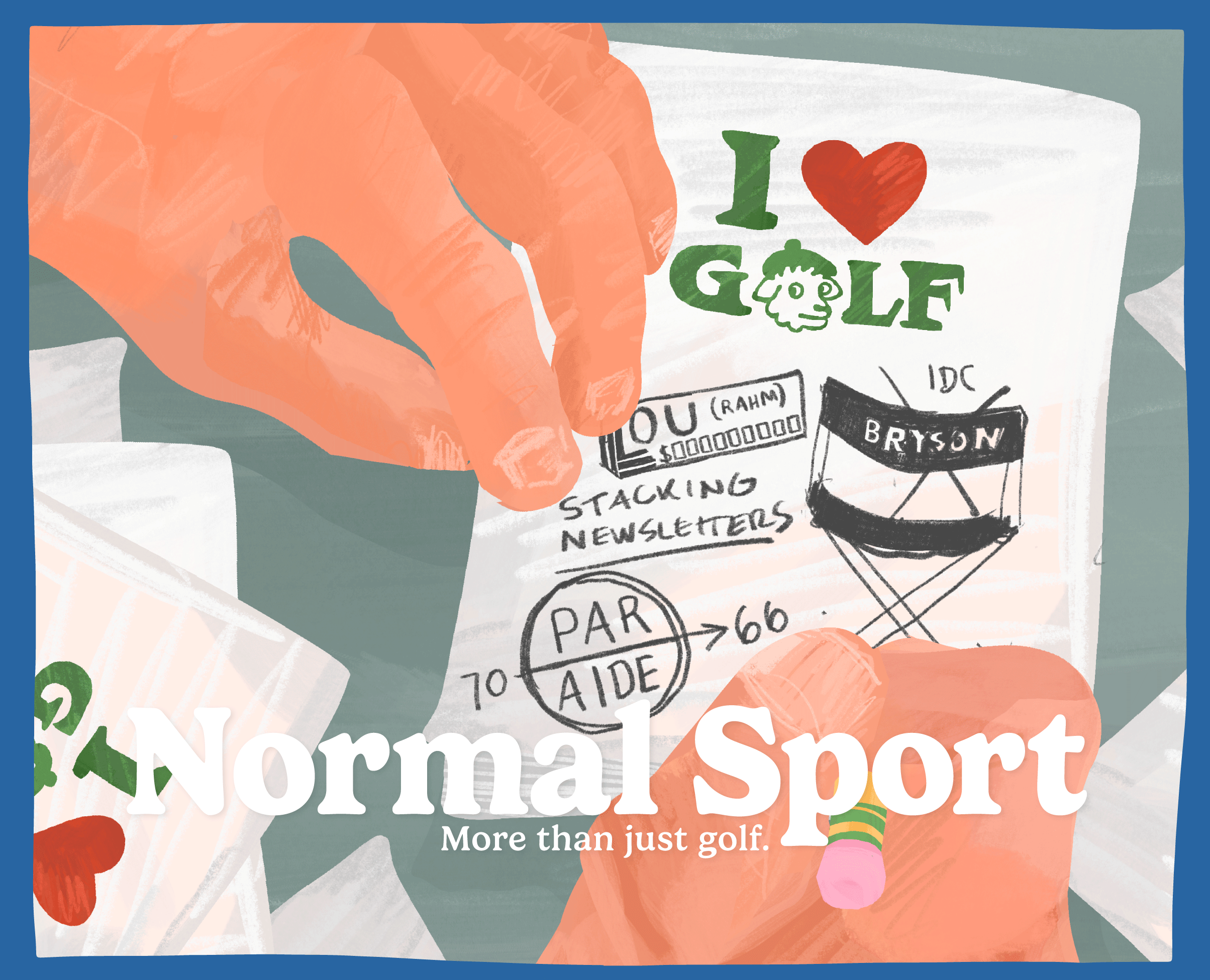
On an earnest note, our Weight of Rory book is being printed, and the printer keeps sending me photos and videos, and I cannot get enough. Probably very silly, but making real, tangible things is so much fun (until I find that first typo).
Name drops today: G.K. Chesterton, H.E., Tron Carter, Michael La Sasso, Alexander Zverev and OKGC.
TODAY’S SPONSOR
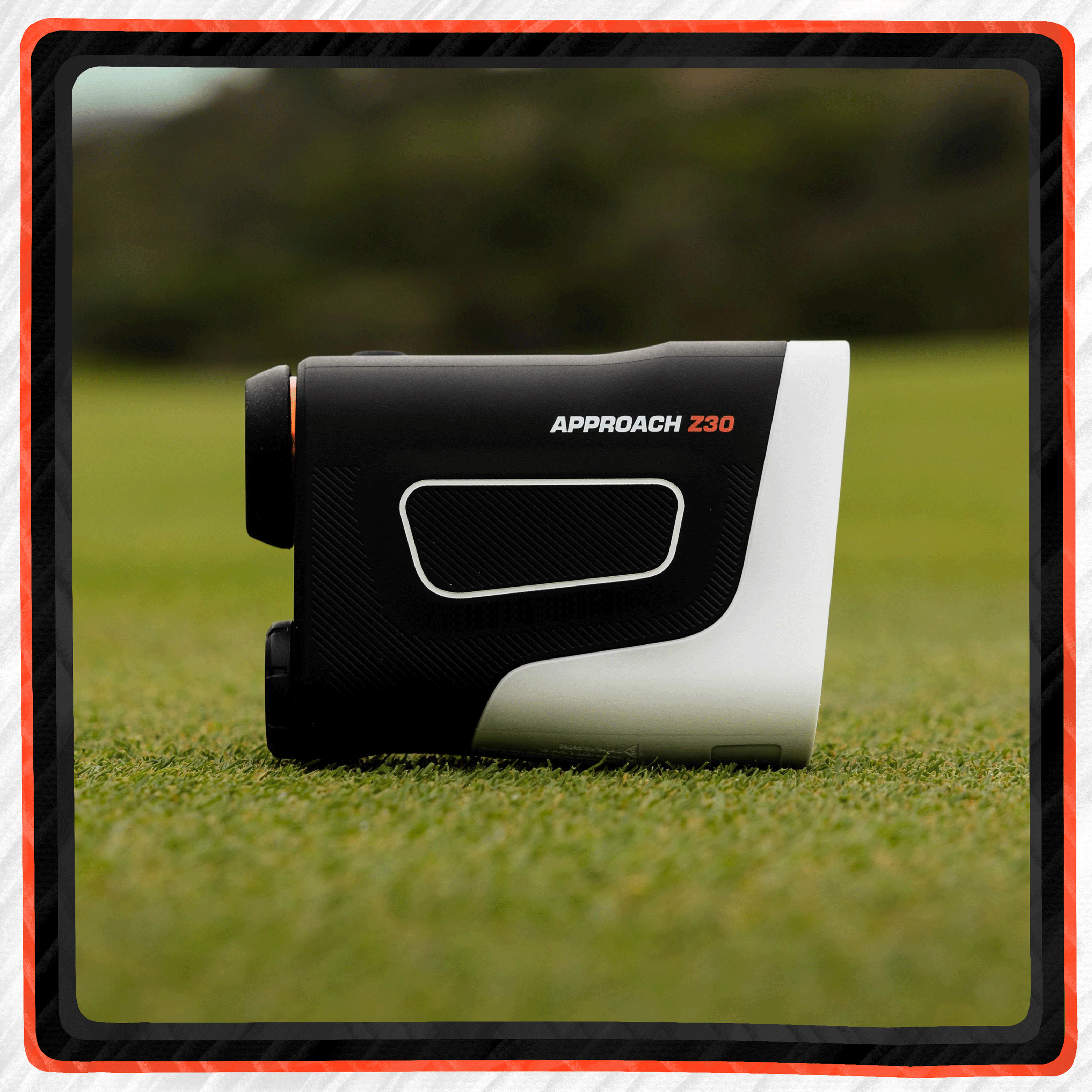
This newsletter is presented by our friends at Garmin and their Approach Z30 rangefinder. You don’t need a Z30 to see into the future and what’s going to happen at the 2027 Ryder Cup, but you could definitely use one for your next round.
I suppose it is a very normal sport thing to be touting things such as the PlaysLike distance and a 6x magnification feature of a device, but both are compelling features of the Approach Z30.
Less of the straining to see the pin …
More time spent hitting the actual shots and working on your one-handed twirl.
1. I did a podcast with Full Swing superstar, Dylan Dethier, on Tuesday about five things that have surprised us about golf in 2026, and one of mine so far is Matt Fitzpatrick turning into Xander Schauffele.
I just didn’t see it coming.
The primary reason this has happened is because Fitz has gone from being Sami Valimaki with his iron play to being Colin Morikawa.
Three numbers to look at in his Data Golf profile.
1. He’s having the worst putting season of his career.
2. A 1.0+ SG approach number per round is insane.
3. This overall mark is a crazy, crazy number for somebody who’s basically been an average putter this year.
2. So why (or how) has the iron play improved this much at this stage of his career? That’s an unusual area for someone to improve on a decade into their career.
Usually it just kind of is what it is at this stage.
Fitz has credited his new coach, Mark Blackburn.
It was [at Hilton Head in 2025] that I saw Mark Blackburn for the first time, and straight away we did some stuff with my approach play.
He kind of looked at the way my … body was, strengths, weaknesses of movement, and sort of tied everything back to that.
The biggest thing for me was the retraction of my arms, making sure they don't get long and get away from me, and that's been the biggest difference. Certainly in terms of my approach play, it's been an unbelievable change, and just felt so good and just so much more controlled.
The numbers above don’t lie. He was 104th in the Data Golf rankings a year ago. Now he’s fourth. They can’t lie when they’re that far apart.
I have so much respect for guys at Fitzpatrick’s level — major champion, Ryder Cupper, mostly a top 20 player in the world for the last 8-10 years — who decide to reinvent themselves or completely change something that they’re doing.
It can go poorly (Hovland, Viktor), but I still respect the effort that goes into trying to become the fifth best player in the world when you’re already the 17th best player in the world.
[Note: This was written before Jim Furyk was named captain. I think the idea still applies, and I should have some more fully formed Furyk thoughts early next week].
3. Speaking of Matt Fitzpatrick! Want to know why the U.S. loses Ryder Cups?
Is it because Europe just makes more putts? No, it’s because they’re committed to a culture of excellence.
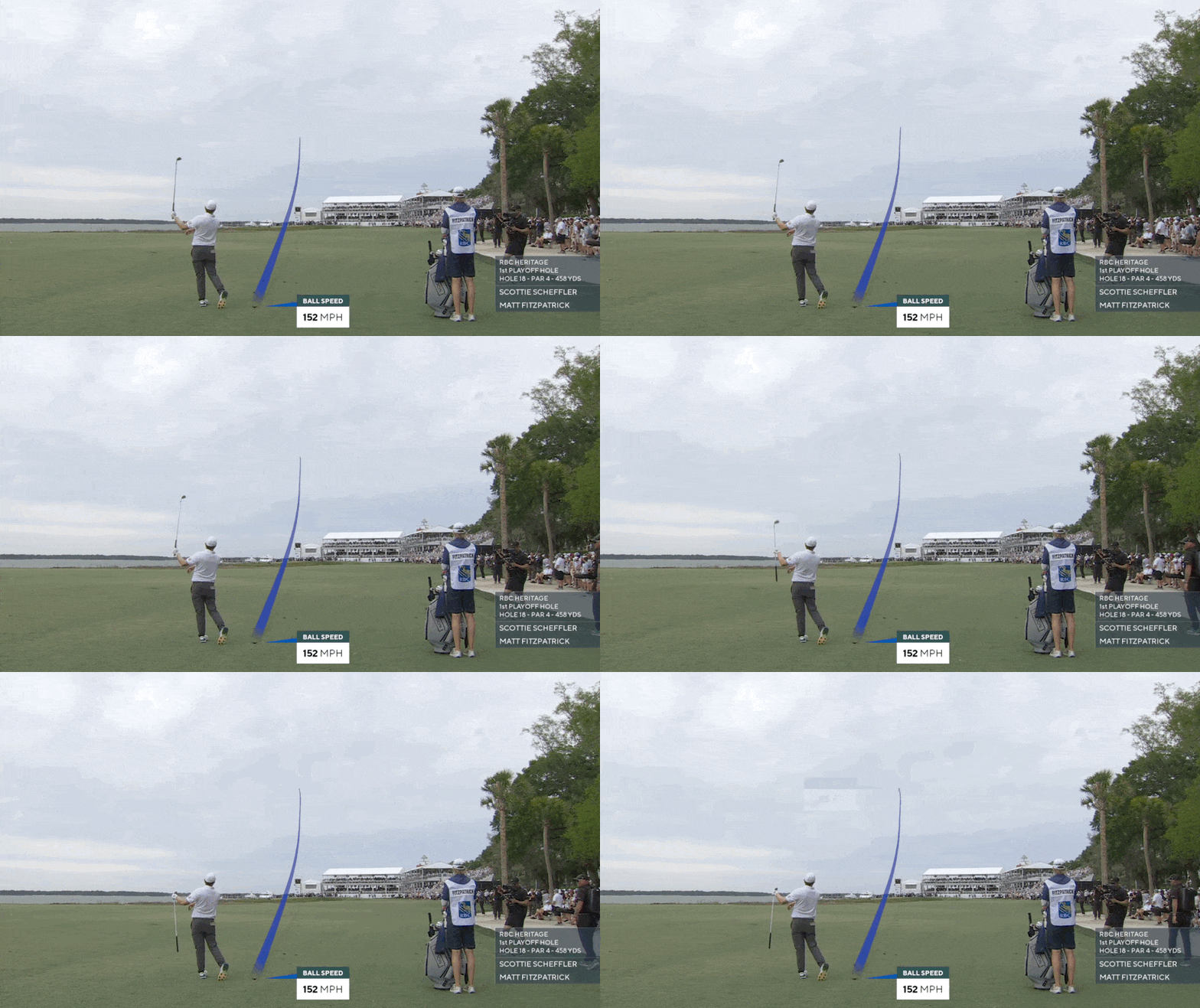
A story in two screenshots.
Screenshot No. 1 …
Screenshot No. 2 …
Europe is out there grinding tape at Adare a full 18 months out from the event, and the U.S. side apparently didn’t have a Plan B if the Cat didn’t want the job.
Of course Europe doesn’t win Ryder Cups just because it sends a scouting team to Ireland in April the year before the event, but doing this is emblematic of its desire to leave no stone unturned.
What was it Tom Watson said at the Masters?
It comes down to the team and how they play. That determines who wins and who loses the Ryder Cup. Captain is certainly a part of that, but you put the onus on the players themselves.
… The competition is based on the players. The players perform, you win. If they don't perform, you lose.
Basically, the captain is there to organize, create the teams -- that's the most important job of the captain -- and to be there when it's necessary to say something to the player. That's the job of the captain. As far as who should be the captain, that's not in my arena.
Tom Watson
The phrase, “History doesn’t repeat itself but it often rhymes” comes to mind.
You don’t have to name a captain at this point in the festivities to go out and win the event, but given Europe’s obsession with detail and the U.S.’, uhh, not obsession with detail (see below).
I think it’s pretty telling that that seat is still empty for the stars and stripes.
4. The story of the week was Brody Miller’s excellent report from Mexico, which is must read stuff if you haven’t read it yet. Brody does such a great job going boots on the ground to get the goods on LIV and its future.
Here are a couple of my takeaways.
• Bryson is considering playing YouTube golf plus the majors. Stick it directly into every one of my veins. You: This is a leverage tactic, he would never do that!
Me: We talking about this guy?
I think he very much would at least try that, even if it wasn’t in his best interest (as outlined by Michael Kim below).
Also, this!
• This sentence: The league reportedly spends $100 million a month. That is so so so much money. And it’s probably only going to increase if you pay Bryson (again). So what is the pitch to more rational investors? Yeah, we spend nine figures a month but have you seen the OKGC branding?
• This was a very important point by Brody.
The heart of most professional sports businesses is the TV deal, with teams sharing revenue from billion-dollar deals like the NFL’s $110 billion and the PGA Tour’s $6 billion deals. But LIV sources reject this “American-centric” notion of TV deals being the only business, which is part of what makes pinning down LIV’s business so difficult. Its greatest successes have come as an events business, which in turn helps attract sponsors, but is that all enough to carry the company?
No, the answer is no. It’s not. It would be like me bringing on Michael Bamberger for $300K a year and then trying to say, You know we’re going to try and do this without brand partners just to see how it goes. You can try it, certainly, and perhaps the business model is a little cleaner but everyone knows how it’s going to go.
• LIV is claiming $500M in sponsorships annually? While I do believe they have momentum in this area, one dialed in golf reporter that I spoke to wondered how many of those sponsors were in fact other PIF-owned companies and called the idea of this number, “money laundering adjacent.” 😂
5. One thing that got lost on me as it relates to LIV — possibly because it came out right around the end of the 2025 Masters, which you may remember was a busy time — was that the PGA Tour basically offered Yasir $500 million for LIV as part of an overall investment in the Tour by the PIF (which is all Yasir wanted to begin with!).
Trump’s victory in the presidential election changed the calculus. The two sides expected his Justice Department would be more lenient toward a consolidation, and during the February meeting at the White House, the PGA Tour proposed a new deal to absorb its rival golf league, while integrating aspects of LIV Golf.
The PGA Tour would give the Saudis a $500 million credit on their $1.5 billion investment, effectively the value it pegged to LIV.
Yasir rejected this because he thought it was insulting, which is apparently one of the better things that has happened to the Tour throughout this entire saga.
6. This point by my sometimes podcast co-host, Hayden, is a good one.
LIV is facing an “our entire draw is superstars but now we don’t have enough money to pay them so what the heck are we?” problem.
This is a problem that is not unique to other startups. Every year another hit show leaves Netflix because its licensing period has run out. But the difference is that Netflix spent the time when it had Friends or The Office building its own catalog that is strong enough to retain customers even if their prior assets disappeared.
LIV has, um, not done that. To its credit, it has tried to do that. But these things take time. Michael La Sassos and Eugenio Chacarras need runway to fully develop, and now suddenly runway is one of the things LIV has the least of.
7. A thought I had this week: Why doesn’t the PGA Tour buy Fried Egg and No Laying Up?
The better question — which is the question everyone has been asking as it relates to TBPN and OpenAI — is whether you can maintain your independence and popularity as a show or an entity even if you’re technically state-owned media?
This involves a lot of humility and trust from the state side. A level that most executives have no interest in bringing to the table.
And maybe the Tour’s “meh” brand would overwhelm the terrific brands of those other entities. But if you’re the Tour, wouldn’t you at least explore buying up the best storytellers for a future in which — at least as it relates to the attention economy — the best story is absolutely going to win?
Part of the reason OpenAI bought TBPN, as posited by Colin and Samir, is because OpenAI sucks at marketing and presenting itself in an interesting way, and the guys who started TBPN are elite at it. The price tag is high — although probably not for a company like OpenAI — but now you have brought the best people in the world at marketing in the AI space onto your team. That’s potentially quite valuable if they’re allowed to continue to do their thing.
How would this work in the golf space? Let’s say the Tour buys NLU and then lets them do an hour-long show with Cam Young where they sit down and rewatch his final round at the Players and talk through it. Would that intrigue you? If the Tour was doing it right now? Maybe, maybe not. If Soly and Tron were doing it? Absolutely.
8. This tennis graphic caught my eye. It’s percentage of time spent playing vs. not playing while you’re actually on the court.
In golf, it’s even crazier.
If we say each shot takes 5 seconds (I guess this is a fair number?), and you have roughly 70 of them per round and each round is roughly 270 minutes, you are playing around 2 percent of the time and thinking for the other 98 percent.
Even if you include prepping for the shot as “time spent playing” that number probably increases to around 25 percent.*
Rory had a great quote on this after the Masters.
You have a lot of time to think. You're out there a long time. There's a long time between shots. There's a long time between rounds. Of all the big sports, I do think it is the most mental. It's the most challenging mentally.
Rory McIlroy
Unquestionably!
Partly because there’s so much solitude. In tennis, at least, someone is out there with you. That may be of no comfort when Sinner is ripping one 81 MPH up the line, but at least it’s a reaction sport and not a “oh how is this going to go wrong” sport.
I think it's hard to stay in the same mental space for four days in a row … I was in a great mental space, like say on the 13th tee shot, for example. All of my practice rounds up here, the weeks leading into it, Monday, Tuesday, great. I hit two left on Wednesday off the tee. Then Thursday, Friday, Saturday, I didn't sniff hitting the fairway.
So it's just there's little things that happen that just start to make you second guess things. It's just very hard to stay on the right -- not in the right spot mentally, but the same spot mentally for a long period of time.
Rory McIlroy
*Tom Kim’s number is incalculable.
9. I’m not sure this Gary Woodland shot got the credit it deserved.
You can look at the numbers.
• 2.42 SG on that shot (meaning the average shots to get it in the hole from that spot was 3.42 shots, and he did it in one).
• This chart by Scott Fawcett and Lou Stagner say that a shot from 200 has a 1 percent chance of being inside 3 feet. And he made it.
• There were four other birdies on that hole the entire day, and Woodland made eagle.
Or you could just watch the swing. The laggy, flushing move that is one of the few that really gets me going. I don’t know that there are more than five other guys on the planet who hit it flusher than Woodland does (off the top of my head: Rory, Brooks, Cam, Tommy, H.E., Adam Scott, Ludvig and Bryson are in the convo).
Everything looks like it is shot out of one of those cannons they use in Monday charity scrambles when you pay them an extra $75.
Or perhaps better said …
10. I thought this (which I saw on Twitter, of course) from G.K. Chesterton was so lovely and wonderful.
Thank you for reading our outrageous golf newsletter that is sometimes (but often barely) about golf. Every edition is handcrafted by me (Kyle) and Jason and our personal war against the inevitability of artificial intelligence.
It is a labor of love, but as long as you keep showing up and Sam Altman hasn’t shut everyone down, we will keep handcrafting and delivering this thing to you with all the obsession we can muster.
1 z
On an earnest note, our Weight of Rory book is being printed, and the printer keeps sending me photos and videos, and I cannot get enough. Probably very silly, but making real, tangible things is so much fun (until I find that first typo).
Name drops today: G.K. Chesterton, H.E., Tron Carter, Michael La Sasso, Alexander Zverev and OKGC.
TODAY’S SPONSOR
This newsletter is presented by our friends at Garmin and their Approach Z30 rangefinder. You don’t need a Z30 to see into the future and what’s going to happen at the 2027 Ryder Cup, but you could definitely use one for your next round.
I suppose it is a very normal sport thing to be touting things such as the PlaysLike distance and a 6x magnification feature of a device, but both are compelling features of the Approach Z30.
Less of the straining to see the pin …
More time spent hitting the actual shots and working on your one-handed twirl.
1. I did a podcast with Full Swing superstar, Dylan Dethier, on Tuesday about five things that have surprised us about golf in 2026, and one of mine so far is Matt Fitzpatrick turning into Xander Schauffele.
I just didn’t see it coming.
The primary reason this has happened is because Fitz has gone from being Sami Valimaki with his iron play to being Colin Morikawa.
Three numbers to look at in his Data Golf profile.
1. He’s having the worst putting season of his career.
2. A 1.0+ SG approach number per round is insane.
3. This overall mark is a crazy, crazy number for somebody who’s basically been an average putter this year.
2. So why (or how) has the iron play improved this much at this stage of his career? That’s an unusual area for someone to improve on a decade into their career.
Usually it just kind of is what it is at this stage.
Fitz has credited his new coach, Mark Blackburn.
It was [at Hilton Head in 2025] that I saw Mark Blackburn for the first time, and straight away we did some stuff with my approach play.
He kind of looked at the way my … body was, strengths, weaknesses of movement, and sort of tied everything back to that.
The biggest thing for me was the retraction of my arms, making sure they don't get long and get away from me, and that's been the biggest difference. Certainly in terms of my approach play, it's been an unbelievable change, and just felt so good and just so much more controlled.
The numbers above don’t lie. He was 104th in the Data Golf rankings a year ago. Now he’s fourth. They can’t lie when they’re that far apart.
I have so much respect for guys at Fitzpatrick’s level — major champion, Ryder Cupper, mostly a top 20 player in the world for the last 8-10 years — who decide to reinvent themselves or completely change something that they’re doing.
It can go poorly (Hovland, Viktor), but I still respect the effort that goes into trying to become the fifth best player in the world when you’re already the 17th best player in the world.
[Note: This was written before Jim Furyk was named captain. I think the idea still applies, and I should have some more fully formed Furyk thoughts early next week].
3. Speaking of Matt Fitzpatrick! Want to know why the U.S. loses Ryder Cups?
Is it because Europe just makes more putts? No, it’s because they’re committed to a culture of excellence.
A story in two screenshots.
Screenshot No. 1 …
Screenshot No. 2 …
Europe is out there grinding tape at Adare a full 18 months out from the event, and the U.S. side apparently didn’t have a Plan B if the Cat didn’t want the job.
Of course Europe doesn’t win Ryder Cups just because it sends a scouting team to Ireland in April the year before the event, but doing this is emblematic of its desire to leave no stone unturned.
What was it Tom Watson said at the Masters?
It comes down to the team and how they play. That determines who wins and who loses the Ryder Cup. Captain is certainly a part of that, but you put the onus on the players themselves.
… The competition is based on the players. The players perform, you win. If they don't perform, you lose.
Basically, the captain is there to organize, create the teams -- that's the most important job of the captain -- and to be there when it's necessary to say something to the player. That's the job of the captain. As far as who should be the captain, that's not in my arena.
Tom Watson
The phrase, “History doesn’t repeat itself but it often rhymes” comes to mind.
You don’t have to name a captain at this point in the festivities to go out and win the event, but given Europe’s obsession with detail and the U.S.’, uhh, not obsession with detail (see below).
I think it’s pretty telling that that seat is still empty for the stars and stripes.
Join the Normal Club to read the rest …
This post will continue below for Normal Club members (all 1,055 of them) and includes thoughts on Brody Miller’s amazing LIV article, why the Tour should buy NLU or Fried Egg (?!) and how much time pro golfers actually spend playing golf.
By becoming a member, you will receive the following …
• Access to 100 percent of our content this week. • An invite to our Slack channel where we watch and talk golf together. • A free digital copy of our Rory book. • 15% off to our pro shop.


.svg)